 The Bitcoin Beacon
Two of the West’s biggest banks are building bitcoin into the same vaults that hold stocks and bonds — institutional-only, and live this year.
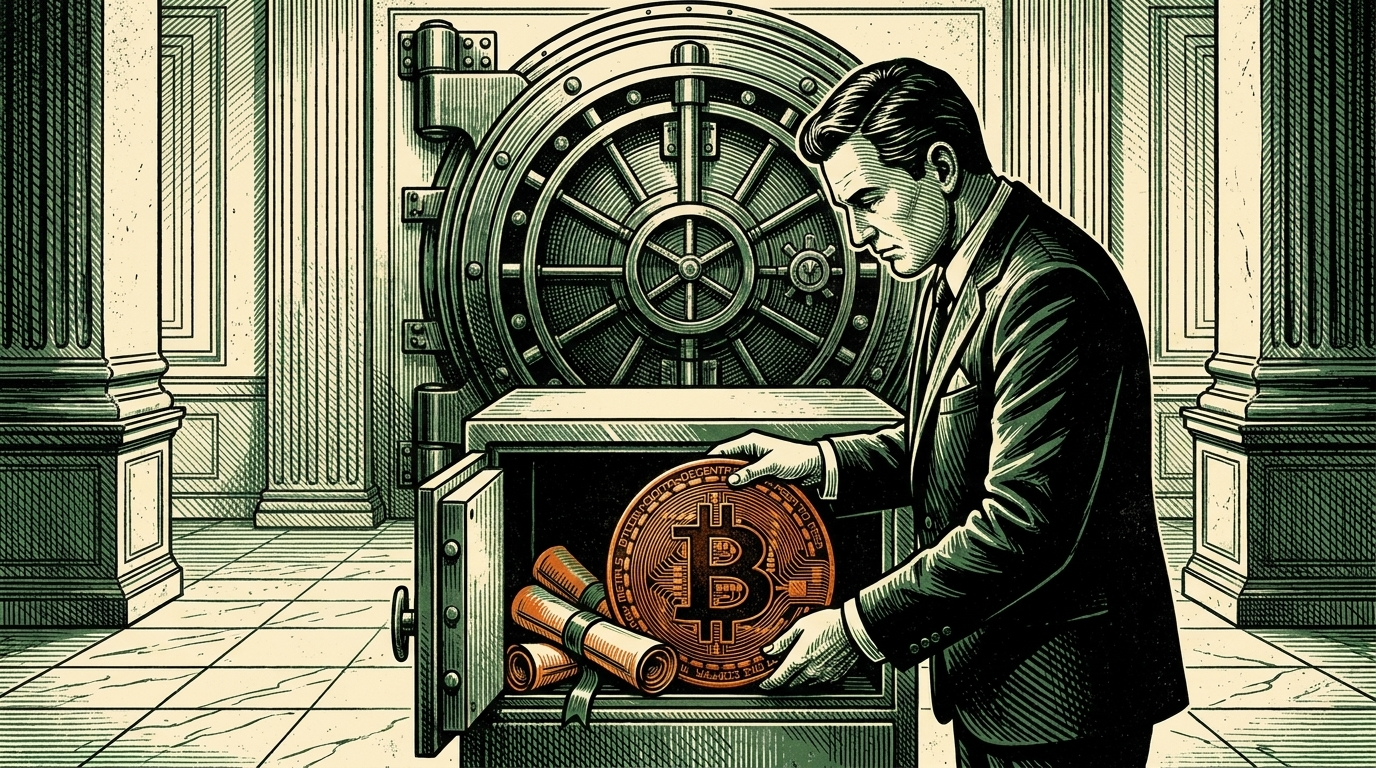
The headline that matters is not that big banks like bitcoin. It is that they are about to hold it in the same place, on the same systems, as everything else a client owns. Citigroup plans to launch institutional bitcoin custody this year, and Germany’s Deutsche Bank is building its own — two of the largest lenders in the United States and Europe treating bitcoin as one more thing a bank safeguards.
Custody is unglamorous and decisive. An asset a bank will not hold is an asset most institutions cannot touch; a pension fund or insurer often cannot legally own something without a qualified custodian standing behind it. By offering to be that custodian, Citi and Deutsche are removing the last operational excuse for staying out.
Citi’s design is the tell. The bank intends to let clients manage bitcoin alongside securities and cash inside a single safekeeping account, with cross-margining between digital and traditional positions, and to run bitcoin through the same reporting and tax workflows it already uses for equities and bonds. Clients would instruct transactions the ordinary way — via SWIFT messages, APIs or a bank interface — rather than through a crypto-native console.
That plumbing is the point. When bitcoin settles into the identical operational pipe as a Treasury bond — same statement, same tax file, same margin calculation — the internal barriers at risk committees and compliance desks fall away. The asset stops being a special case that needs its own policy and becomes a line on the same page as everything else.
An asset a bank will not hold is an asset most institutions cannot touch.
Deutsche Bank is taking the partnership route. Germany’s largest bank plans to offer bitcoin and crypto custody in 2026 by integrating the custody infrastructure of the Austrian firm Bitpanda while continuing to work with the Swiss technology company Taurus. It is aimed at corporate and institutional clients, the same audience Citi is courting, and it fits a wider pattern: Morgan Stanley, JPMorgan and others have been expanding digital-asset services and retooling for markets that trade around the clock.
The build-versus-partner split matters less than the destination. Whether a bank writes its own custody stack or licenses one, the outcome for a client is the same — a regulated institution willing to hold the keys and answer for them.
There is an irony a careful reader should sit with. Bitcoin was designed so that no bank had to stand between a holder and their money; “not your keys, not your coins” is the culture’s founding warning. Bitcoin held in a Citi safekeeping account is, in the strict sense, a claim on Citi — a custodial IOU, not self-custody. For a sovereign individual, that is a step backward from the asset’s whole point.
For the institutions these banks are chasing, it is the only step available. A regulated insurer is not going to run its own multisig; it needs an audited custodian inside its existing legal and operational world, and that is precisely what is now arriving. The result is two bitcoins living side by side: the self-custodied coin that answers to no one, and the institutional coin that lives in a bank vault — each serving a holder the other cannot. The news this week is that the second kind just got two of the biggest vaults in the business.
It also lands into a market where such adoption is being tallied openly — Wall Street firms now publish scorecards ranking which banks have moved and how far. Custody is the column that counts most, because it is the one that converts interest into the ability to actually hold.
Editor’s note: Citigroup’s institutional bitcoin custody and Deutsche Bank’s custody offering are announced plans targeting 2026 launches, with final availability subject to regulatory approvals; product details (single safekeeping account, cross-margining, SWIFT/API instruction, Bitpanda/Taurus infrastructure) are drawn from the coverage cited. This is a custody-infrastructure story; it is not investment advice.
Free. Five minutes. No hype.
Subscribe free