 The Bitcoin Beacon
When a state debases its own money and then charges citizens to leave it, the levy is not a policy. It is a confession.
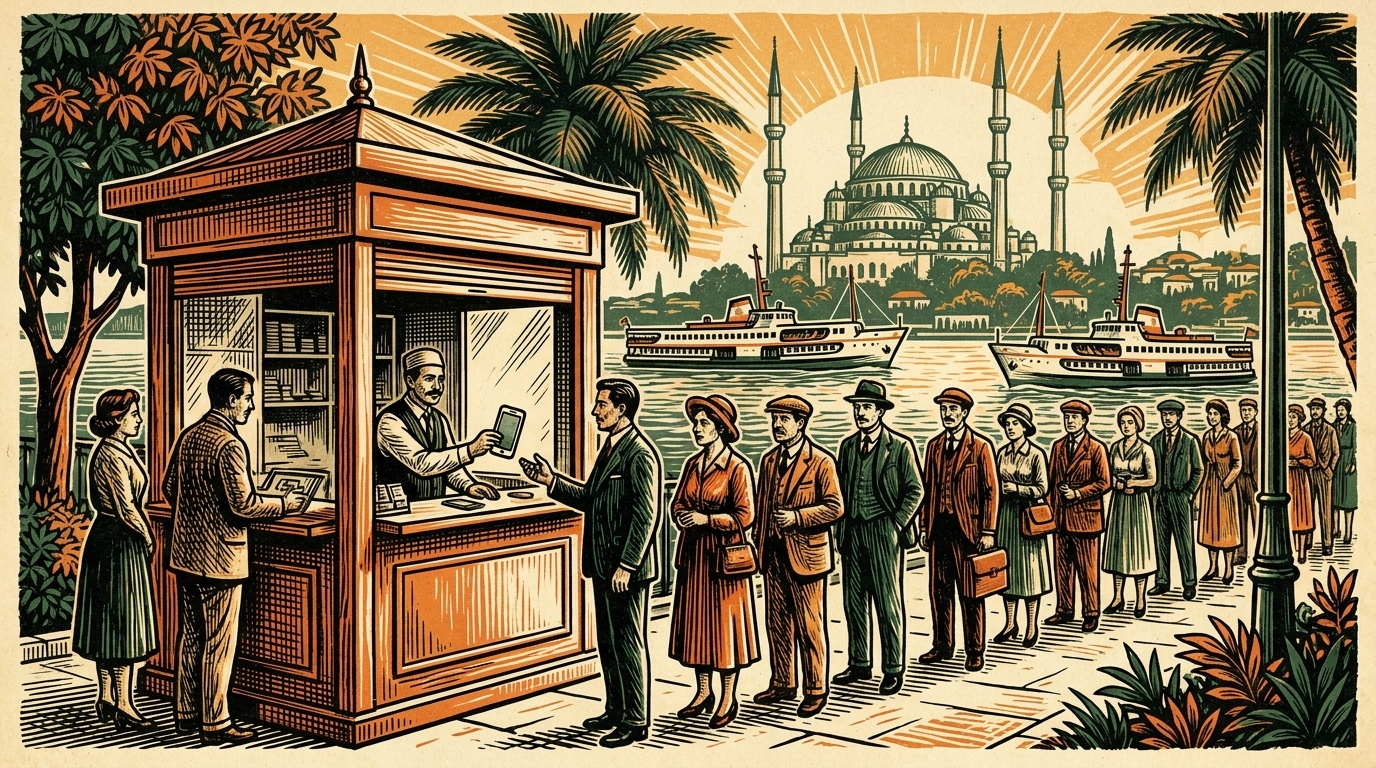
Turks moved roughly $200 billion through crypto last year, making Turkey one of the largest digital-asset markets on earth. That number is not a story about speculation or get-rich schemes. It is a story about a lira that has lost more than half its value against the dollar, and about tens of millions of people who concluded, rationally, that holding their savings in it was a losing trade.
When a currency melts, ordinary people become macroeconomists. They do not need a theory of money to understand that the bread costs more each month and the paper in their pocket buys less. They reach for whatever holds — dollars, gold, and increasingly a stablecoin or a slice of bitcoin on a phone.
Faced with that flight, Ankara has landed on a revealing response. It has not banned the exit; it has decided to charge admission. Using crypto for payments has been illegal in Turkey since 2021, keeping the asset in the box marked “investment” rather than “money.” A licensing regime enacted in 2024 required exchanges to register with the Capital Markets Board, with a hard deadline of June 30, 2026, to secure their permits — a date that just passed, thinning the field to the licensed and compliant. And a proposed tax framework would add a 10% withholding on gains from digital-asset transactions, plus a small levy on the service providers themselves.
Read the sequence in order. The state runs a monetary policy that erodes the lira. Citizens escape into assets the state cannot inflate. The state then licenses the exits and taxes the escape. Each step is defensible on its own terms; together they describe a government that has given up on making its money worth holding and moved on to monetizing the flight from it.
Debase the money, then charge people to leave it.
Most of that $200 billion is not bitcoin; in Turkey, as everywhere, dollar-pegged stablecoins do the heavy lifting for people who just want out of the lira and into something dollar-shaped. But bitcoin occupies the position none of the alternatives can. Dollars in a Turkish bank can be subject to capital controls; a stablecoin depends on an issuer that can freeze a balance; even gold has to be stored and moved. Bitcoin is the one exit that has no gatekeeper to license and no issuer to lean on — which is exactly why a state that wants to toll the exits finds it the hardest to reach.
A payment ban and a withholding tax can raise the cost of using bitcoin. They cannot revoke the option. That is the uncomfortable lesson Turkey keeps teaching: you can regulate the on-ramps, but you cannot un-invent the alternative, and every year the lira slides you hand more people a reason to find it.
The case for Ankara’s approach is not nothing. Unlicensed exchanges have failed Turkish savers before, and a licensing regime with capital and custody rules is a genuine consumer protection, not merely a leash. Taxing investment gains is ordinary policy that most countries impose without controversy; there is nothing uniquely sinister about asking crypto profits to be declared like any other. And formalizing the market brings anti-fraud and anti-money-laundering oversight that a purely underground market lacks.
All true — and all beside the deeper point. Consumer protection and tax compliance are the reasons a healthy state regulates a healthy market. They are not why a country ends up with a $200 billion crypto market in the first place. That happens when the money fails, and no license fixes the money.
Editor’s note: the ~$200bn volume and “fourth-largest market” framing are 2024–2025 industry estimates; the 10% withholding and 0.03% service-provider levy are proposals, not yet enacted, and terms may change. The June 30, 2026 licensing deadline follows Law 7518 (2024). This is an opinion piece; the lira’s losses and the payment ban are matters of record.
Free. Five minutes. No hype.
Subscribe free