 The Bitcoin Beacon
The world’s fourth-most-populous country is opening a regulated door to bitcoin — and slamming hundreds of others shut.
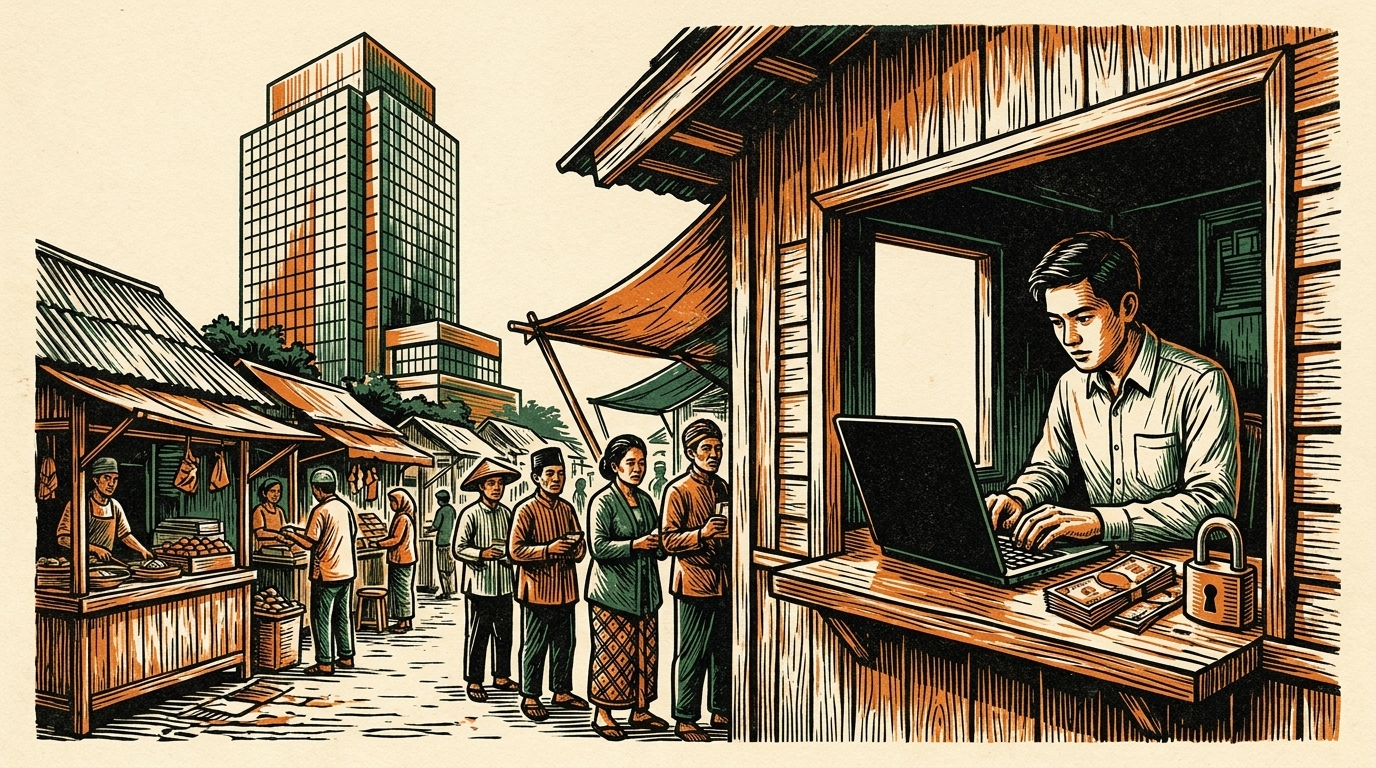
On July 3, the crypto exchange BTSE went live in Indonesia through a licensed local joint venture, becoming one of only a small number of platforms cleared to operate under the country’s tightening rules. The launch, built on the rebranded local exchange NVX, carries a license from the Financial Services Authority, OJK, to act as a Digital Financial Assets and Crypto Assets Trading Operator — a permission that lets it plug into Indonesian banks, take rupiah deposits and list rupiah trading pairs.
That is the welcome mat. The other half of Indonesia’s policy is a broom. In the first five months of 2026, OJK’s anti-illegal-finance task force, Satgas PASTI, shut down 228 unlicensed platforms trading digital assets. The message to the market is blunt: come in through the front door, licensed and supervised, or don’t come in at all.
The crackdown has a legal engine behind it. Oversight of crypto in Indonesia has shifted to OJK, the same regulator that supervises banks and capital markets, and a June 2026 update to the country’s financial-sector law hardened the licensing regime that platforms must now satisfy. The effect is to treat a crypto exchange less like a commodities booth and more like a regulated financial institution, with capital, custody and reporting obligations to match.
For a global operator, the appeal of the PAKD license is precisely its scarcity. Being one of the few names allowed to work with local banks and settle in rupiah is a moat; every platform that gets swept up by Satgas PASTI is a competitor removed. BTSE’s own executives were candid about the prize, calling Indonesia the market they see “really dominating Southeast Asia in digital economy growth.”
Come in through the front door, licensed and supervised, or don’t come in at all.
The reason firms accept the friction is the size of the room on the other side. Indonesia is a nation of roughly 280 million people, and by industry estimates it already counts tens of millions of active crypto users — one platform’s internal figures suggest the country may exceed 40 million. Alongside the Philippines, Vietnam and Thailand, Indonesia scores at the top of regional adoption rankings.
What the licensing regime shapes is not whether Indonesians can hold bitcoin, but how. A supervised, bank-connected exchange with rupiah on-ramps lowers the cost and risk of buying bitcoin for a mainstream saver, while pushing the peer-to-peer and offshore trading that regulators can’t see toward the margins. It is financial inclusion with a turnstile.
Indonesia is running the opposite experiment from its neighbors that lean on prohibition. Rather than trying to wall bitcoin out, it is trying to funnel it through a small set of licensed pipes it can monitor and tax. That is friendlier to adoption than a ban — a legal, rupiah-settled path is how most people will ever touch bitcoin — but it also concentrates access in a handful of gatekeepers and hands the state a clear view of who is buying.
For bitcoin specifically, the trade is familiar: a regulated on-ramp in the world’s fourth-largest population is real adoption, but it is bitcoin with a supervisor attached. Whether OJK widens the gate or keeps it narrow will decide how much of that 40-million-user market runs through the light, and how much stays in the shadows.
Indonesia is not banning bitcoin; it is rationing the doors. A few licensed, bank-connected exchanges get to serve a market of tens of millions in rupiah, while 228 unlicensed platforms have been shut this year. It is one of Asia’s largest on-ramps — open, supervised and deliberately narrow.
Editor’s note: the 228-platform figure covers OJK/Satgas PASTI actions from January to May 2026; user-count estimates (tens of millions; one platform’s ~40 million figure) are industry estimates, not an official census. The OJK regime governs crypto assets broadly; this piece isolates the bitcoin-relevant on-ramp.
Free. Five minutes. No hype.
Subscribe free