 The Bitcoin Beacon
A settle-in-local-currency layer is quietly removing the one thing that kept shopkeepers away from bitcoin: having to hold it.
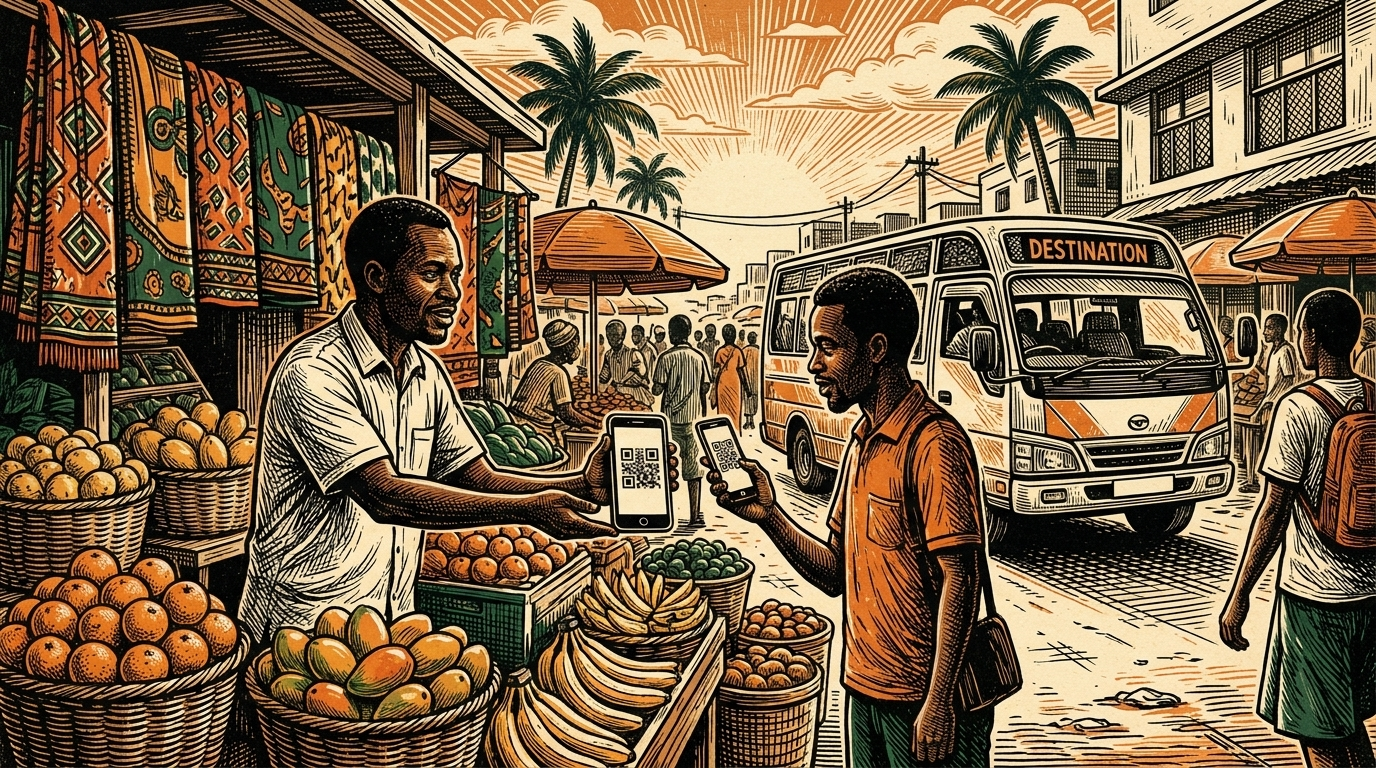
In a Nairobi market, a fabric seller takes a bitcoin payment and never touches a satoshi. The customer scans a QR code and pays over the Lightning Network; a gateway converts it in the same second; the shopkeeper’s balance ticks up in Kenyan shillings. To the merchant it feels like any other tap. To the network, it is one more shop quietly plugged into bitcoin.
That arrangement — accept bitcoin at the till, settle in local currency — is the model spreading fastest across Africa’s biggest consumer markets in mid-2026. It flips the question that stalled merchant adoption for a decade. The old ask was: would a trader hold a volatile foreign asset? The new one is: would a trader take a cheaper payment that lands as the money they already use? For most, that is not a hard question.
The mechanics are deliberately boring, and that is the point. A customer holds bitcoin in a wallet; the shop displays a code; a payment processor sits in the middle, receiving the bitcoin and instantly selling it for shillings, naira or cedis, which it deposits to the merchant. The trader signs up for what looks like a normal card-style terminal and never opens a crypto exchange account, never manages a private key, never watches a price chart.
Lightning is what makes it feel instant. Bitcoin’s base layer confirms in blocks; its Lightning layer clears small payments in under a second for a fraction of a cent, which is the only way a coffee or a bag of rice makes sense as a bitcoin transaction. The conversion to fiat rides on top, so the shopkeeper carries no exchange-rate exposure between the sale and the settlement.
The old ask was whether a trader would hold bitcoin. The new one is whether they’d take a cheaper payment that lands as cash.
The layer is being built by a cluster of small firms, not one dominant player. In Nigeria, a startup called Mular has built software that lets customers pay in crypto while the merchant receives naira, and says it has processed on the order of $500,000 in such payments. BitSpenda, a Lightning-to-fiat interface born in Ghana, now serves merchants and users across Ghana, Kenya and Nigeria. Gateways in the mold of CoinCircuit let a Lagos restaurant show a “pay with crypto” button while its bank statement still reads in naira.
Reach into the low end of the market comes from a different set of tools. Machankura lets people send Lightning payments over USSD and plain SMS — the menu-driven codes that work on feature phones with no smartphone and no data plan — across Ghana, Kenya, Malawi, Nigeria, South Africa and Uganda. In Kenya, traders have migrated to apps like Fedi that fold receiving bitcoin, converting currencies and spending into a single wallet built for cheap Android phones. Different front ends, same underlying idea: keep the bitcoin invisible to the person who does not want to think about it.
Strip away the ideology and the case is arithmetic. A Lightning-to-fiat checkout in South Africa or Kenya runs roughly 0.5% to 1% in conversion fees. Card processing on the same sale runs 2.5% to 3.5%, when a card rail is even available — and across much of the continent it is not, leaving cash as the only alternative, with all of cash’s theft risk and change-making friction.
For a thin-margin shop, the gap between 3% and 1% is not a rounding error; it is the difference between losing money on card fees and keeping it. Layer on cross-border trade, where a Nairobi wholesaler paying a supplier in Kampala would otherwise wait days and pay a correspondent bank, and the instant, borderless settlement stops being a novelty and starts being the cheapest option on the table.
None of this makes bitcoin the everyday money of African commerce yet, and the settle-in-fiat design admits as much by converting out of bitcoin at the moment of sale. The volatility problem is not solved; it is handed to the processor, which absorbs the seconds of price risk and prices that into its spread. If liquidity thins or a local currency gyrates, that spread widens.
Stablecoins ride the very same rails, and in raw volume they dominate: a dollar-pegged token is an easier sell to a merchant who just wants dollars. Bitcoin’s distinct claim is narrower and more durable — it is the neutral, issuer-less asset underneath, the one no company can freeze and no central bank can print. And regulation remains a live variable: tax treatment and licensing differ sharply between Lagos, Nairobi and Accra, and a hostile ruling in any one market can slow a gateway overnight.
Africa’s merchant-bitcoin story has stopped being about persuading shopkeepers to believe in a new asset. The winning products hide the asset entirely: bitcoin comes in over Lightning, cash comes out the other side, and the fee is a third of a card’s. That is a smaller, less romantic pitch than “banking the unbanked” — and a far more sellable one.
Editor’s note: named processors and the ~$500,000 Mular figure are drawn from the July 13 TechCabal survey of African crypto-payment models; fee ranges (0.5–1% vs 2.5–3.5%) are as reported for Lightning-to-fiat versus card processing. Volumes on these rails are dominated by dollar-pegged stablecoins; this piece isolates the bitcoin-and-Lightning layer.
Free. Five minutes. No hype.
Subscribe free