 The Bitcoin Beacon
A non-binding fatwa may prove the harder veto on a state bitcoin program a year in the making.
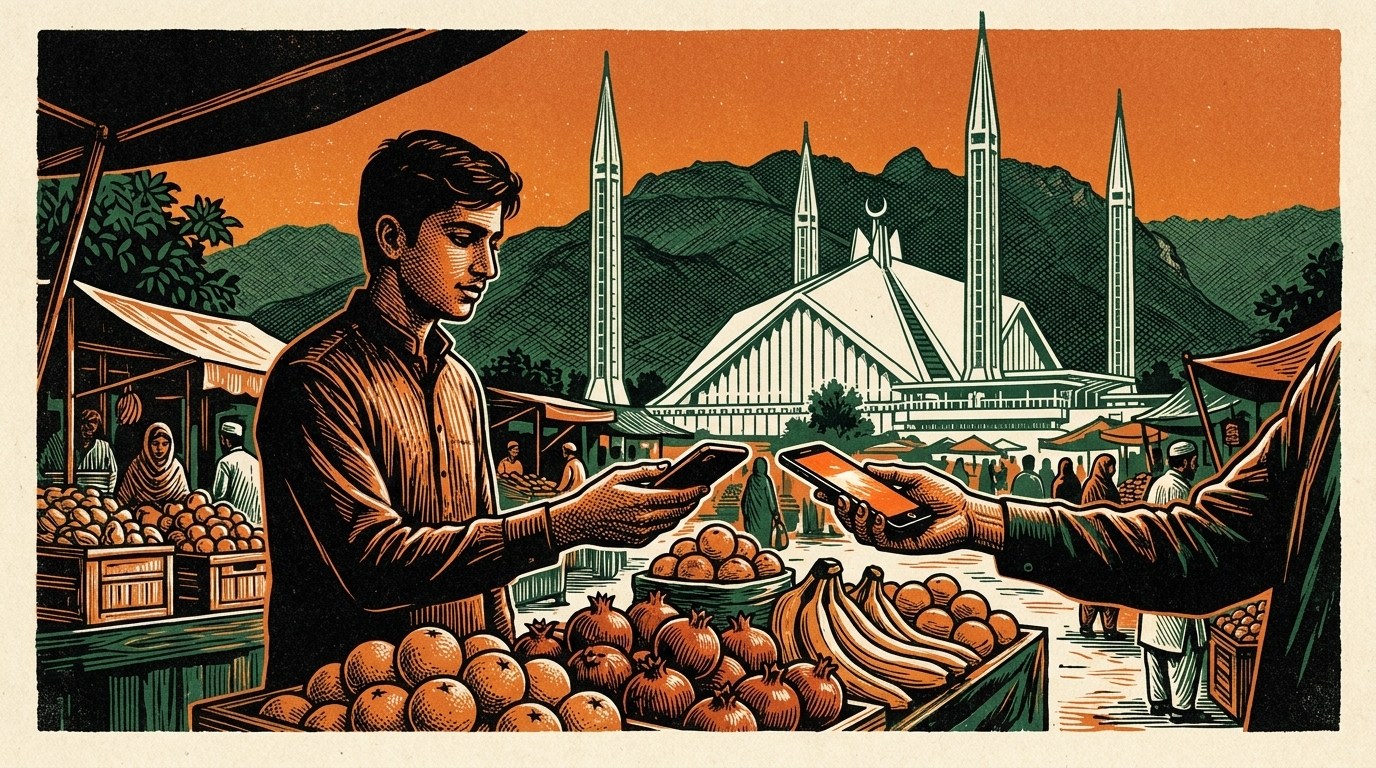
For a year Pakistan has been assembling the machinery of a bitcoin state: a new federal regulator, a Virtual Assets Act passed through both houses, a lifted ban that lets banks serve crypto firms, and announced plans for a strategic bitcoin reserve and mining powered by surplus electricity. Then the country’s most influential Islamic scholar told the whole project it was haram.
Mufti Muhammad Taqi Usmani, a towering figure in modern Islamic finance, issued a religious ruling that trading cryptocurrencies is impermissible under Islamic law. Crucially, the fatwa pre-empts the usual workaround: it holds that renaming the asset — “virtual currency,” “token,” “stablecoin” — does not change its status. All of it, the ruling says, falls in the same prohibited category.
The state’s ambitions are not small. The Pakistan Virtual Assets Regulatory Authority (PVARA) was set up as an autonomous federal regulator with licensing and enforcement powers aligned to FATF standards. In April, Pakistan lifted a seven-year restriction, allowing banks to service licensed virtual-asset providers. Officials have courted global miners and floated a bitcoin reserve seeded from state resources.
Steering it is Bilal Bin Saqib, PVARA’s chairman, CEO of the Pakistan Crypto Council, and the country’s minister of state for crypto and blockchain. On July 11 he met Usmani directly, describing the discussion as constructive and arguing that blockchain, digital assets, stablecoins and tokenized real-world assets are distinct technologies that each deserve independent technical and Shariah assessment rather than a single verdict.
Usmani did not budge. There was no indication after the meeting that he had revised his opinion. His objection tracks classical concerns in Islamic finance — excessive uncertainty (gharar), speculation resembling gambling (maysir), and the absence of tangible backing — and by refusing to distinguish between coins by label, the ruling forecloses the argument that a “utility token” or an asset-backed stablecoin sits on different footing.
A fatwa is not a statute. In a country of 240 million Muslims, it can still be the harder veto.
A fatwa does not carry the force of state law, and Pakistan’s regulators can proceed regardless. But in a nation where the overwhelming majority are Muslim and where Usmani’s pronouncements shape both personal conscience and the design of Shariah-compliant financial products, the ruling is a real constraint. It can suppress retail participation, complicate bank and institutional involvement, and hand political opponents a religious argument against the entire program.
Bin Saqib’s response has been to keep the conversation open, calling for sustained dialogue among scholars, regulators and industry so that policy stays “consistent with Islamic principles while keeping pace with emerging financial technologies.” That is the needle Pakistan now has to thread: a state that wants bitcoin’s upside must first win an argument that is not about economics at all.
Whether other prominent scholars align with Usmani or carve out distinctions; whether PVARA issues a formal Shariah framework rather than case-by-case assurances; and whether the long-promised government-facilitated mining — “in weeks” since December — finally comes online while the religious question is unresolved.
Pakistan built the legal and institutional scaffolding for bitcoin faster than it settled the religious question underneath it. The fatwa is not law, but in a Muslim-majority country it is a veto the regulator cannot license its way around — only argue with.
Editor’s note: the fatwa addresses cryptocurrency trading broadly; this piece isolates the bitcoin-relevant stakes (Pakistan’s reserve and mining plans). Bin Saqib’s account of the July 11 meeting is his own, shared on social media. Titles verified: Bin Saqib chairs PVARA and serves as minister of state for crypto and blockchain.
Free. Five minutes. No hype.
Subscribe free