 The Bitcoin Beacon
The reason Americans don’t spend bitcoin is written in the tax code, not the protocol.
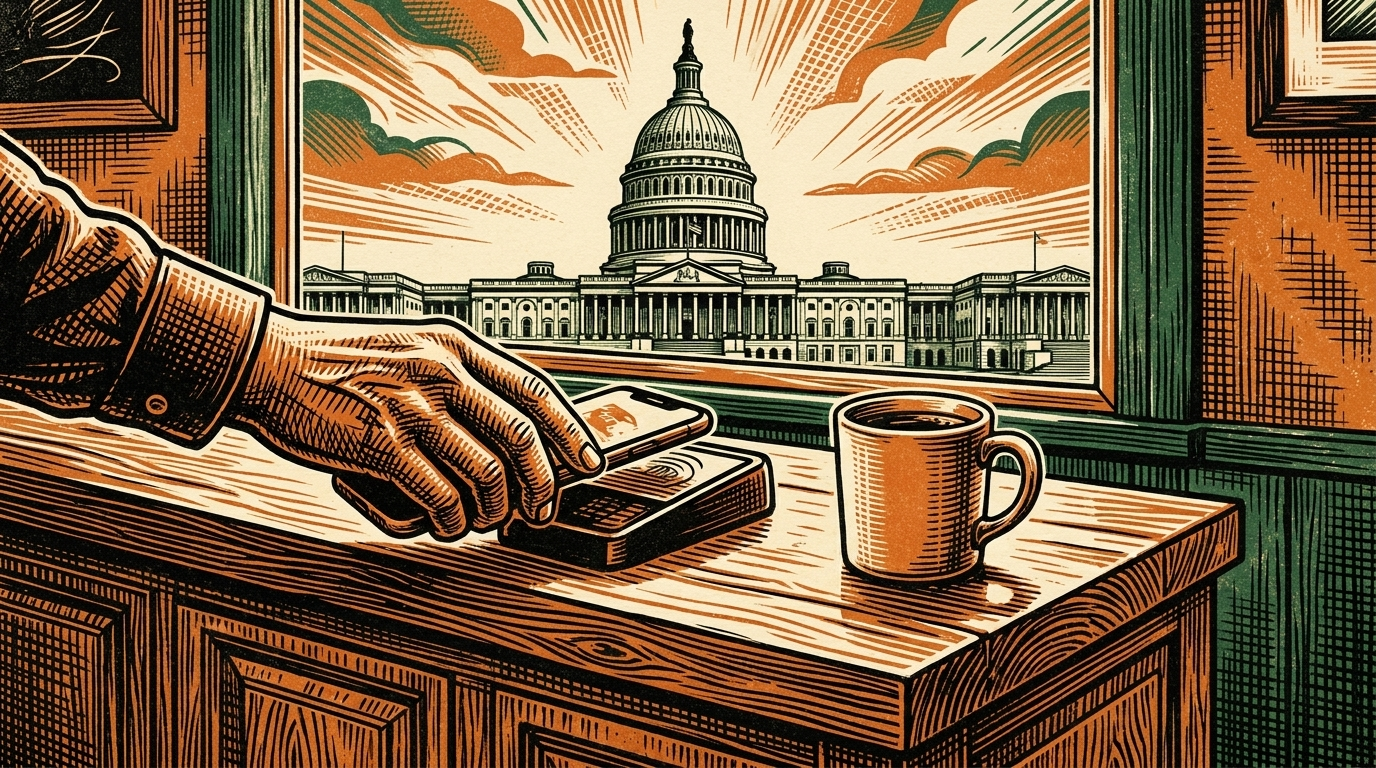
Buy a coffee with bitcoin in the United States and you have, in the eyes of the IRS, disposed of property. You owe capital-gains math on the difference between what you paid for those satoshis and what they were worth at the register — for a $4 latte. Multiply that by every small purchase and you have the real reason bitcoin functions as an investment, not a currency, in America. It was never the technology. It was the paperwork.
A bill now moving through the House Ways and Means Committee pokes at exactly this. H.R. 9178, the “Less Tax Paperwork for Digital Asset Owners Act,” introduced by Representative Rudy Yakym, would create a de minimis exception that excludes gain or loss when a digital asset is spent to pay a blockchain network fee of $10 or less. It would also grant tax parity to regulated dollar stablecoins, sparing users from reporting trivial fluctuations, and let retail taxpayers elect a simplified annual accounting method.
Read the fine print and the relief is narrow. The exemption targets network fees — the small on-chain cost of transacting — not the coffee itself. It is not the long-sought $200 de minimis threshold that would make everyday bitcoin spending genuinely tax-free, the goal of the perennial Virtual Currency Tax Fairness Act. Advocates wanted a doorway; this is a cat flap.
But the principle matters more than the dollar figure. For the first time, a tax-writing committee with bipartisan buy-in — ranking Democrat Richard Neal among the supporters — is conceding that taxing micro-transactions into oblivion is a policy choice the country can unmake. Companion measures round out the intent: one bill would offer a voluntary-disclosure amnesty for past unreported activity, another would tax freshly mined coins as ordinary income at creation.
Advocates wanted a doorway. This is a cat flap. The direction is what counts.
Everything the Global South teaches about bitcoin — that it becomes money when spending it beats the alternative — runs into an American wall that has nothing to do with fees or block times. A Kenyan paying over Lightning and an American paying over Lightning get the same instant settlement; only one of them also triggers a taxable event and a spreadsheet. Fix the code and you remove the single largest reason US bitcoin sits in cold storage instead of tills.
The other side deserves its say. A broad de minimis exemption is an invitation to game — splitting large sales into small “purchases,” harvesting losses at the register — and the Treasury has resisted it for years on exactly those grounds, plus the revenue it forgoes. There is also a simpler objection: most Americans do not want to spend a volatile asset at all; they want a stable dollar, and the stablecoin, not bitcoin, is the instrument already filling that role. On that view, untaxing tiny bitcoin payments solves a problem most consumers do not have.
Both things can be true. The bill is small, and the demand for spending bitcoin in a high-income economy is real but limited. Yet the friction it targets is precisely the kind that compounds: remove it and a marginal user becomes a payer, and the tax code stops quietly answering a question — is bitcoin money in America? — that Congress keeps saying it wants to leave open.
H.R. 9178 will not turn bitcoin into everyday US money. But by admitting that the paperwork is the point, a bipartisan committee has named the real barrier — and once you concede that taxing tiny payments is a choice, the only argument left is about the threshold.
Editor’s note: this is an opinion column. H.R. 9178 was introduced and heard in June 2026 and is advancing at committee; it is not yet law and its provisions may change. The $10 network-fee exemption is as written in the bill text; the $200 de minimis threshold refers to the separate Virtual Currency Tax Fairness Act.
Free. Five minutes. No hype.
Subscribe free