 The Bitcoin Beacon
Galaxy powered up the first phase of a data-center campus and leased it to an AI firm — the clearest sign yet that mined bitcoin now finances silicon.
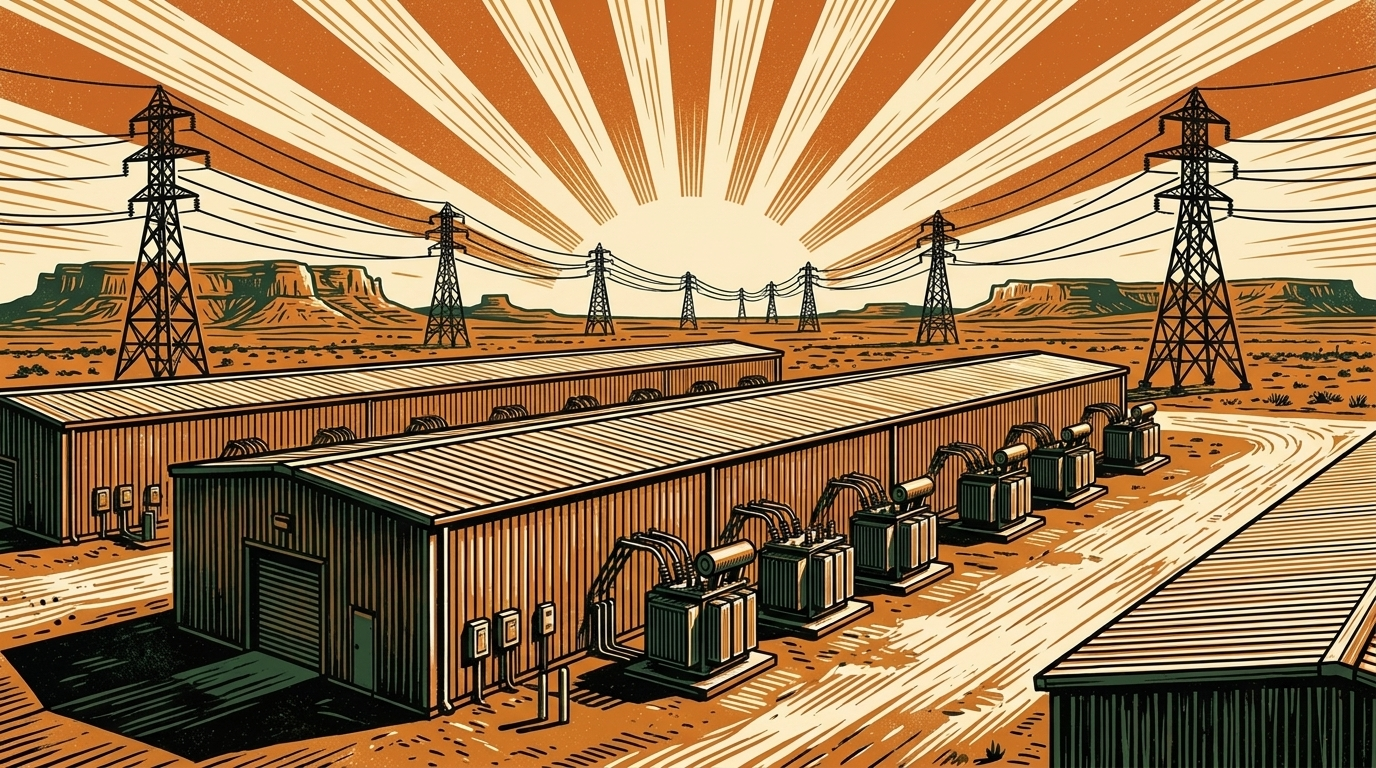
The land was bought to mine bitcoin. This week it started renting to an artificial-intelligence company instead. Galaxy Digital energized the first phase of its Helios campus in West Texas and handed the initial capacity to a tenant that has nothing to do with hashing blocks — the plainest example yet of a shift running through the whole bitcoin-mining industry.
The specifics are large. The Helios site sits on an interconnection that the Texas grid operator, ERCOT, has approved for up to 1.6 gigawatts of power. Phase I delivered 133 megawatts of critical IT load to the AI-cloud firm CoreWeave under a 15-year lease. That single tranche draws roughly what a mid-sized city consumes, and it is the beginning of the build, not the end.
The economics are unforgiving and simple. Bitcoin’s block reward halves every four years, and at current prices pure mining only pays for operators who buy electricity below about three cents a kilowatt-hour. The same sites that make cheap-power mining viable — land near substations, a grid interconnection, cooling, fiber — are exactly what an AI data center needs, and AI tenants will pay far more per megawatt than a bitcoin block ever will.
So the machine flips. A company that spent years assembling power and real estate to mine bitcoin discovers its most valuable asset was never the miners; it was the interconnection queue and the megawatts behind it. Bitcoin on the balance sheet becomes the collateral that finances the transformers, the buildings and the fiber for a higher-margin computing business.
The valuable thing was never the miners. It was the megawatts.
The market is enforcing the pivot with a whip. American Bitcoin Corp, a firm that stuck to pure mining, has fallen roughly 95% from its peak share price — about $600 million of equity value erased, against reported operating losses north of $118 million. Others are converting outright: Azio AI Holdings completed a merger and rebrand on July 10, funding six megawatts of NVIDIA B200 capacity by selling down its bitcoin treasury.
The through-line is that diversified energy operators are outrunning single-purpose miners, and the ones that read the shift early are financing the change with the bitcoin they already hold.
A bitcoin reader should sit with the tension rather than smooth it over. On one hand, this is bitcoin doing exactly what a reserve asset is supposed to do: a company uses its holdings as collateral to build real, income-producing infrastructure, without selling the underlying coins. That is bitcoin as productive capital, not a chip in a casino.
On the other hand, every megawatt that moves from mining to AI is a megawatt no longer securing the network, and a firm that sells its treasury to buy GPUs is voting against bitcoin with its balance sheet. The honest read is that both are happening at once. The network loses some marginal hashrate; the asset gains a new use as the thing that gets built with, rather than the thing being built.
Galaxy’s Helios is a marker: the most valuable thing a bitcoin miner owns turned out to be its power, and mined bitcoin is now the collateral that turns that power into AI infrastructure. Pure miners that missed the shift are down 90%-plus. Whether that is bitcoin maturing or bitcoin being cashed out depends on which balance sheet you read.
Editor’s note: the Helios Phase I figures (1.6 GW interconnect, 133 MW, 15-year CoreWeave lease) and the American Bitcoin / Azio comparisons are compiled from July 11 secondary coverage and Galaxy’s investor materials rather than a single primary filing; treat the percentages as reported estimates. Verify before quoting.
Free. Five minutes. No hype.
Subscribe free