 The Bitcoin Beacon
A housing bill quietly outlawed a Fed digital currency through 2030. The rails went to private stablecoins — and left bitcoin the only money no one issues.
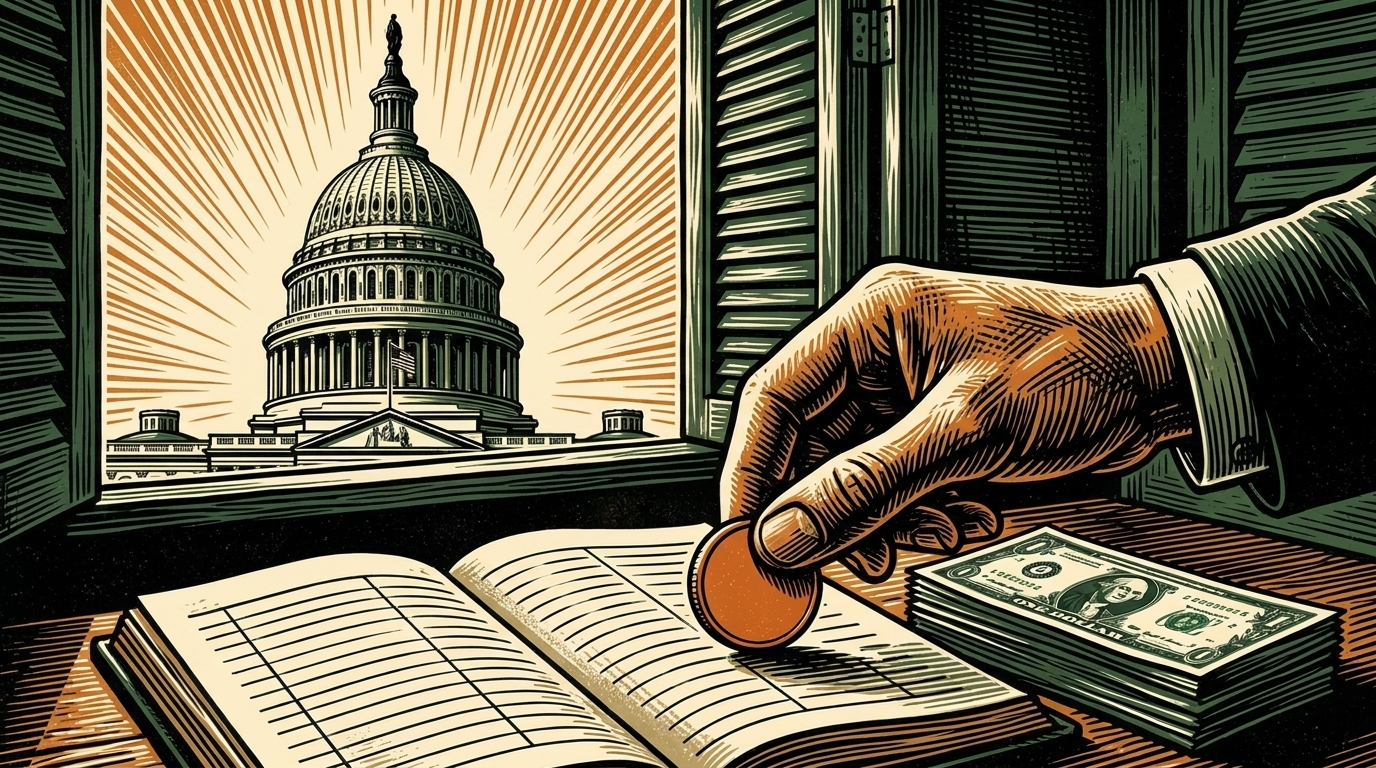
The most consequential monetary decision of the week arrived by accident of process, buried in a housing bill. At midnight on July 10 the 21st Century ROAD to Housing Act became law without a presidential signature — the ten-day constitutional review window lapsed while President Trump withheld his pen over an unrelated voter-registration clause. Inside it sits a provision that has nothing to do with housing: a permanent ban on a Federal Reserve digital dollar.
The text bars the Board of Governors and the regional Federal Reserve banks from issuing a retail central-bank digital currency — and any asset that functions like one — through December 31, 2030. There will be no American CBDC this decade. For the civil-liberties camp that spent years warning about programmable state money with expiry dates and spending controls, it is a clean win.
Read it against the same week’s other headline and the real decision comes into focus. Days earlier, Circle won final approval from the Office of the Comptroller of the Currency to open a national trust bank — First National Digital Currency Bank, N.A. — to custody the reserves behind its USDC stablecoin. Its stock jumped more than 15%.
So the state did not choose between a government digital dollar and plain cash. It chose between a government digital dollar and a private one, and it picked private. The rails for a programmable dollar in America will be built by companies, operating under federal bank charters, with the ability to freeze, reverse and blocklist baked in at the protocol level. The digital dollar is coming. It will just wear a corporate logo instead of a federal seal.
The digital dollar is coming. It will wear a corporate logo, not a federal seal.
Bitcoiners have long treated “stop the CBDC” as their cause, and it is worth being clear that they mostly won it — and that the win does little for bitcoin directly. A dollar is a dollar whether the ledger belongs to the Fed or to Circle. What changed is who holds the switch, not whether there is one. A private stablecoin can still freeze your balance; it just answers to a compliance desk instead of a central-bank governor.
That is exactly what throws bitcoin’s distinctiveness into relief. Set the state CBDC and the corporate stablecoin side by side and they share a defining feature: an issuer. Someone can mint more, someone can freeze yours, someone is accountable to a regulator who can order both. Bitcoin is the only digital money on the table with no one behind the desk — no issuer to lean on, no reserve to audit, no button to press. Its entire proposition is the absence the other two cannot offer.
Honesty requires the counterargument, and it is a strong one. For the overwhelming majority of people, a stable, dollar-denominated, insured-enough private token is not a compromise — it is the product they actually want, and bitcoin’s volatility disqualifies it from that job. Critics will also note that concentrating dollar issuance in two or three firms is its own systemic risk, and that a bank-chartered stablecoin, subject to the same surveillance obligations as any bank, may be no more private than a well-designed public one. On that reading, celebrating this as a bitcoin victory mistakes the absence of a competitor for the presence of demand.
Both things can hold. Most people will reach for the digital dollar, and they should be free to. But a monetary system that has now foreclosed the neutral state option and enshrined the freezable private one has, almost inadvertently, made the case for why a third kind of money — one nobody issues — needs to exist at all.
America didn’t reject the digital dollar. It nationalised the decision to a handful of private issuers and called it freedom. That is a real civil-liberties gain and a real concentration of power at once — and it clarifies bitcoin’s only durable edge: it is the one digital money with no one standing behind the counter.
Editor’s note: this is an opinion column; the reporting underneath it — the July 10 enactment, the CBDC ban through 2030, and Circle’s OCC charter — is drawn from the sources above. Stablecoins are outside the Beacon’s bitcoin-only beat and appear here only as the policy contrast. Not financial or legal advice.
Free. Five minutes. No hype.
Subscribe free