 The Bitcoin Beacon
The treasury purchases get the headlines. The bigger adoption story is a checkbox flipped to ‘on’ at millions of American registers.
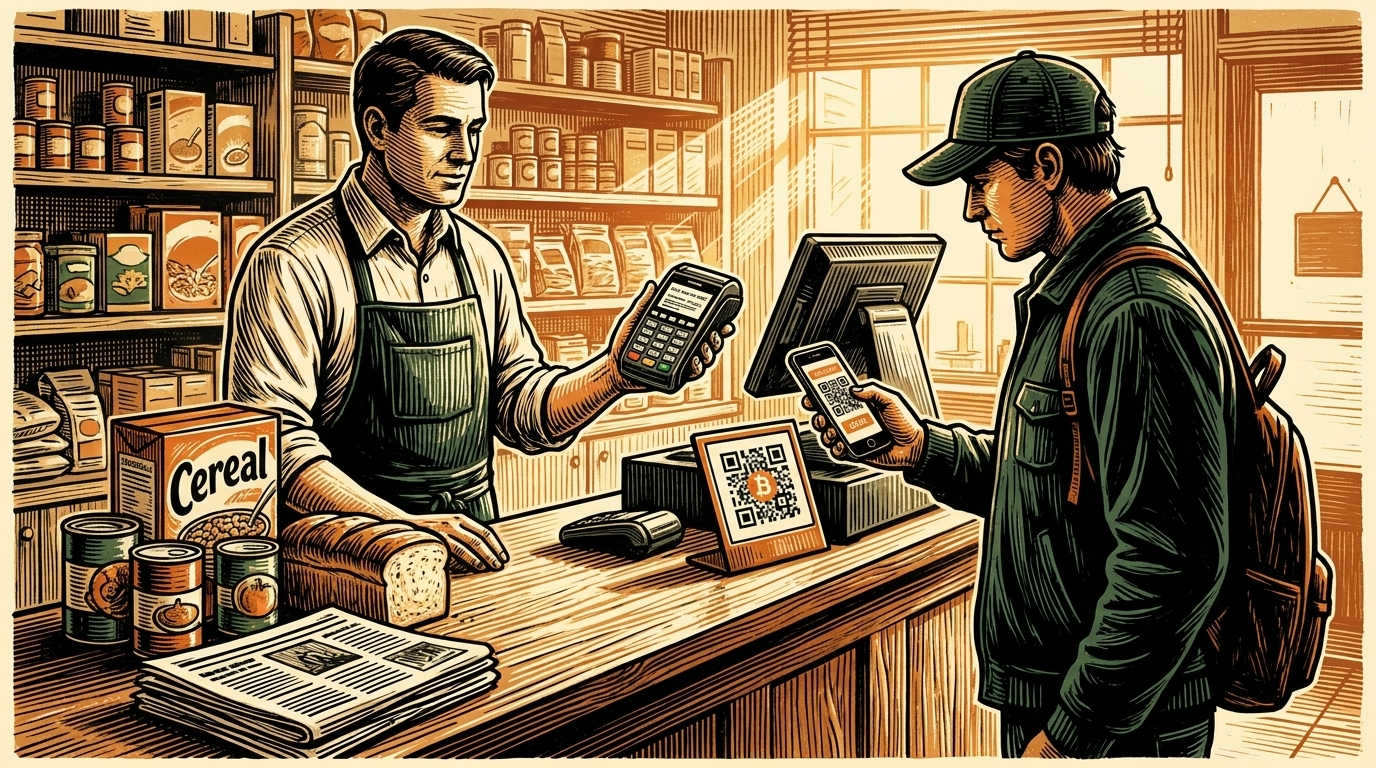
Every week this paper covers companies buying bitcoin to sit on it. Strategy’s 843,000 coins, Metaplanet’s treasury, the record 110,000 BTC public companies bought last quarter. It is a real story, and it is the wrong one to lead with. The bigger thing happened at the register, and almost nobody threw a conference about it.
Since March 30, Square has enabled bitcoin acceptance by default for eligible United States sellers. Not opt-in. Default. A merchant using Square’s point-of-sale hardware now takes bitcoin over the Lightning Network unless they actively turn it off — and it costs them nothing in processing fees until 2027, after which the fee is a flat 1%, well below the 2.5–3.5% cards skim.
Anyone who has studied how humans use software knows the power of the default. The setting most people never change is the setting that wins. For fourteen years bitcoin payments have been an opt-in curiosity: download a wallet, find the rare merchant, scan a code, feel like a pioneer. Opt-in adoption tops out with the enthusiasts.
Flipping the default inverts the funnel. Now the enthusiast is the customer with the wallet, and acceptance is simply there — at the coffee shop, the barber, the food truck, spread across millions of Square sellers who made no decision at all except to not opt out. The merchant keeps bitcoin or auto-converts to dollars at the point of sale; either way the customer just paid in bitcoin at a real business.
The setting most people never change is the one that decides what money looks like.
The Beacon spends most of its time in Nairobi, Lagos, San Salvador and Boracay because that is where bitcoin-as-money was forced into being by necessity — broken remittance rails, inflating currencies, the unbanked. Square is the developed-world version of the same lesson, arriving through convenience rather than crisis. The mechanism that worked in a Kenyan market — scan a QR, settle instantly, pay a rounding error in fees — is now bolted to the checkout of a country that did not think it needed it.
That is why the treasury framing undersells the moment. A company parking coins on a balance sheet is a bet on price. A payment terminal that takes bitcoin by default is a bet on use — and use is the thing that turns bitcoin from an asset people hold into money people spend. One is speculation with a press release; the other is plumbing.
Two of them, because a Take that only cheerleads is a blog post. First, default acceptance is not the same as default demand: a terminal that can take bitcoin does nothing until a customer chooses to pay that way, and most Americans still won’t. Reachability is not usage — a lesson this paper has flagged before, in South Africa’s 650,000 bitcoin-enabled checkouts.
Second, most merchants auto-convert to dollars instantly, which means Square, not the shopkeeper, is holding bitcoin for a heartbeat. That is a payment rail using bitcoin as a wire, not a circular economy where bitcoin stays bitcoin. It is still a profound expansion of where bitcoin is spendable — but spendable and spent are different words, and the gap between them is where this story will actually be won or lost.
Millions of American businesses now accept bitcoin because a company changed a default setting, not because they decided to. That is a quieter headline than a billion-dollar treasury buy — and a bigger one for whether bitcoin becomes money.
Editor’s note: this is a labelled opinion piece. Square began seller rollout in November 2025 and moved to default-on for eligible U.S. sellers on March 30, 2026, per company statements; “millions of merchants” refers to eligible Square sellers, not confirmed active bitcoin transactors. Reachability is not usage. Verify before quoting.
Free. Five minutes. No hype.
Subscribe free