 The Bitcoin Beacon
A July 8 decree scraps income tax on bitcoin traded at home and lets miners burn stranded gas — the bid to win back a hashrate the country drove out in 2021.
Five years ago Kazakhstan was, briefly, the most important place on the bitcoin map. When China expelled its miners in 2021, tens of thousands of machines rolled across the border into a country with cheap coal power and a light regulatory touch. For a few months Kazakhstan hosted close to a fifth of the world's hashrate. Then the grid buckled, winter blackouts followed, the government blamed the miners, and a crackdown of licensing rules, power caps and a mining tax sent the rigs looking elsewhere.
On July 8, President Kassym-Jomart Tokayev signed a decree that reverses the posture. Titled “On Measures to Stimulate and Develop the Digital Assets Industry,” and drafted by the Ministry of Artificial Intelligence and Digital Development, the National Bank and the Astana International Financial Centre, it is an invitation rather than a warning.
Three provisions matter for bitcoin. The first exempts income earned from digital-asset transactions on licensed, Kazakh-regulated platforms from personal income tax. In plain terms: trade or realise gains through a government-approved domestic venue and the state takes no cut of the profit. The point is not generosity. It is to make the licensed onshore venue more attractive than the offshore exchange where most Kazakh activity currently clears.
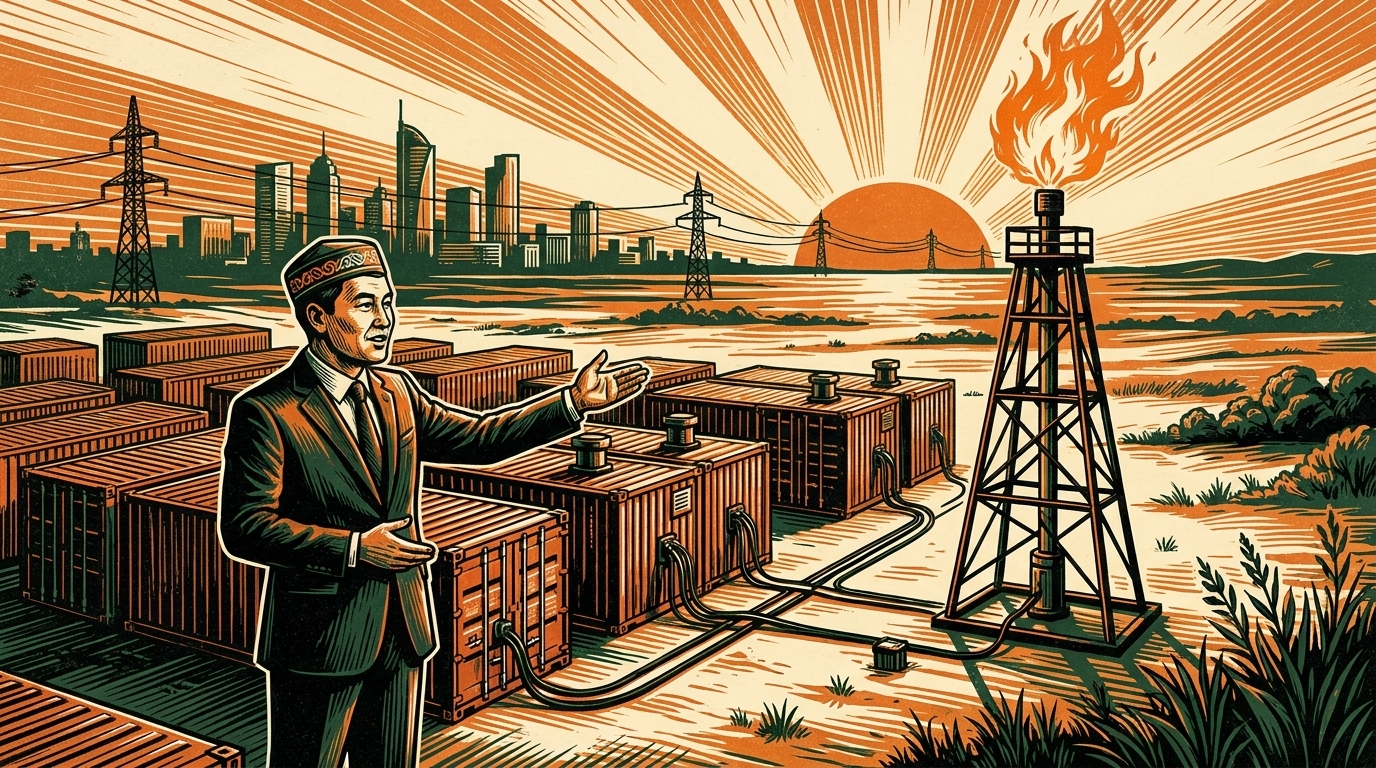
The second lets miners generate electricity from associated and natural gas — the gas that oil fields flare off — provided that gas is not needed for state purposes. That turns a wasted byproduct into hashrate and gives miners a power source that does not compete with households on the grid, the exact complaint that triggered the 2021 backlash.
The third builds on a state crypto reserve the National Bank floated last autumn, valued then at between $500 million and $1 billion. The decree folds it into a broader plan to route mined and seized coins into a sovereign holding rather than auctioning them off.
The country that once blamed miners for its blackouts now wants them as an export industry.
The honest answer is that the crackdown worked too well. After the tax and the power caps, licensed miners either left or went dark, and the activity did not disappear — it moved offshore, out of the tax base and out of view. A ban does not end an industry that runs on electricity and an internet connection; it just relocates the receipts.
Kazakhstan has watched cheaper, hungrier jurisdictions absorb the hashrate it shed. Ethiopia now runs roughly 2.6% of the network on hydropower. The United States remains dominant. Russia and the Gulf states court miners openly. A government sitting on stranded gas and surplus generating capacity in parts of the country has an obvious card to play, and the 2021 experience taught it that heavy-handed rules push the value somewhere it cannot tax.
Much of the decree is about stablecoins and cross-border payment rails, not bitcoin, and a bitcoin reader should not overstate what is on offer. The tax break is conditioned on using licensed domestic infrastructure that barely exists yet; the reserve is a stated intention more than an audited balance sheet; and Kazakhstan's history of abrupt reversals means miners who were burned once will move capital carefully.
There is also the grid question the 2021 crisis never resolved. Authorising gas-fired mining is a way to add load without leaning on the public network, but it ties the industry to fossil generation at a moment when the cleanest hashrate — Ethiopian hydro, Paraguayan run-of-river — is winning the cost race. Cheap and stranded is a real edge; cheap, stranded and clean is a better one.
Regular readers will recognise the shape. Nigeria taxed what it could not stop. Ghana licensed what its villages had already built. Morocco replaced a ban with a licensing bill. Kazakhstan is the mining version of the same lesson: prohibition forfeits the revenue without ending the activity, and the second-best option is to build a border the value has a reason to stay inside.
Whether the miners come back is a question of trust, not tax code. A jurisdiction that expelled them once has to prove the welcome is durable. But the direction of travel is clear enough — a state that treated bitcoin as a threat to its power supply now treats it as something to keep at home.
Kazakhstan is trying to re-import an industry it drove out, using tax relief and stranded gas as bait. The tools are sound; the credibility is the open question, and the reserve is a promise until someone can audit it.
Editor’s note: the decree text reaches us through secondary coverage, not an official English translation; several provisions concern stablecoins and payments rather than bitcoin, and this piece isolates the mining, tax and reserve elements. The $500M–$1B reserve figure is the National Bank’s late-2025 estimate, not an audited holding. Verify before quoting.
Free. Five minutes. No hype.
Subscribe free