 The Bitcoin Beacon
The reserve just passed 7,680 BTC and $510 million, still growing about a coin a day. Whether that is buying or bookkeeping could decide the Fund’s next payout.
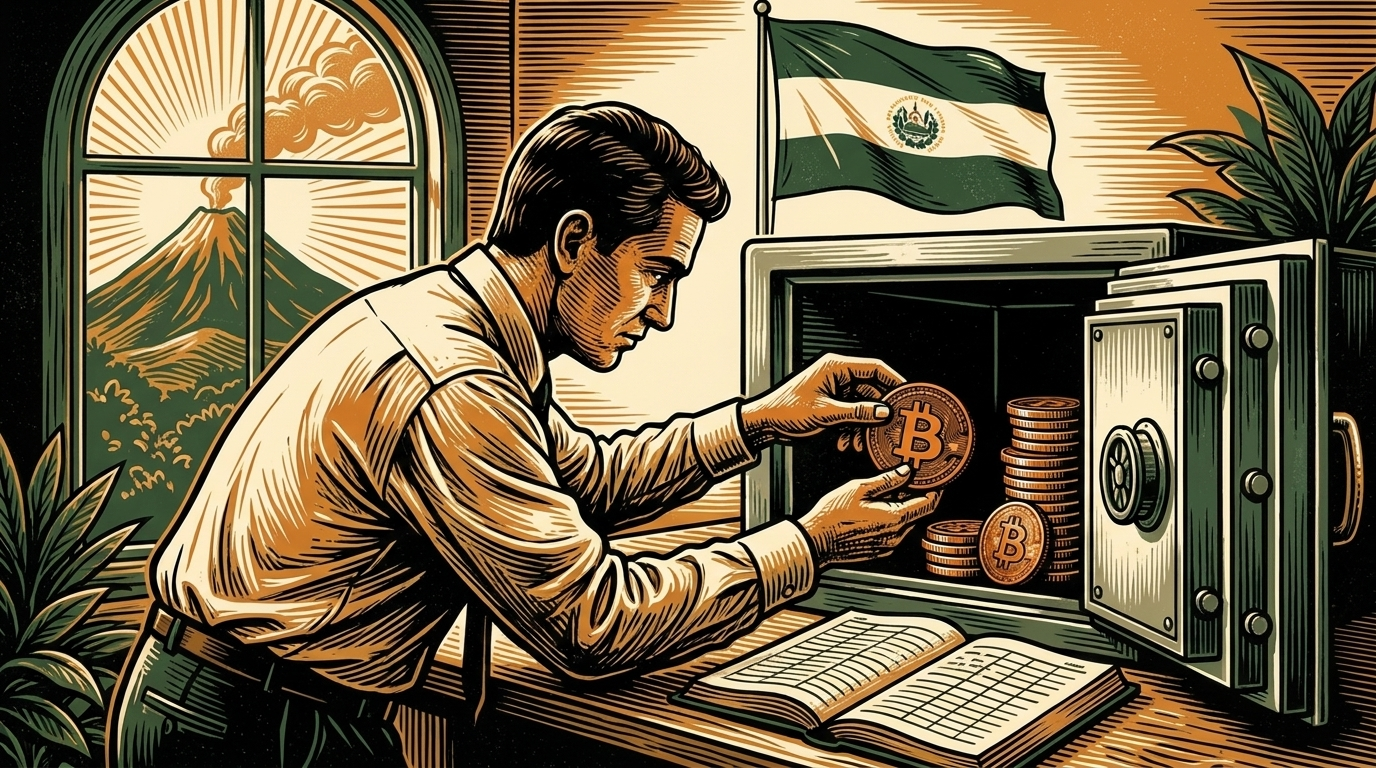
El Salvador keeps doing the one thing its lenders asked it to stop. As of late June the government’s bitcoin holdings crossed 7,680 BTC — worth more than $510 million even after a punishing month for the price — and the public accounting still shows the stack growing by roughly a coin a day. The problem is that a $1.4 billion program with the International Monetary Fund, signed in December 2024, sets the ceiling on new public-sector bitcoin purchases at exactly zero.
So either El Salvador is breaking its word, or the coins are arriving some other way. The answer the two sides give is the whole story.
San Salvador’s position, echoed by the IMF, is that the reserve is not buying — it is consolidating. The apparent increases, IMF spokesperson Julie Kozack said, reflect “movements across various government-owned wallets,” notably transfers from a BANDESAL cold-storage address into the headline reserve. On this reading the total bitcoin the state controls has not changed; the coins simply moved to a wallet the public tracker watches.
The counter-reading comes from the chain and from bitcoin historian Pete Rizzo, who posted in late June that more than 170 BTC had in fact been purchased in 2026. The reserve has grown from about 5,968 BTC when the program was formalised to more than 7,600 today — an increase of roughly 1,700 coins that has to be explained one way or the other.
The dispute is not about the price of bitcoin. It is about the meaning of a wallet transfer.
Here is the uncomfortable part for critics: the consolidation defence is technically defensible. International public-sector accounting standards treat all government-controlled wallets as a single consolidated position, so shuffling coins between them genuinely is not a “purchase.” If every satoshi already belonged to the state, moving it changes nothing on the balance sheet.
The exposure is in the next review, not this one. IMF disbursements from the $1.4 billion facility are released tranche by tranche, each conditioned on the country meeting its targets. If a future review cannot reconcile the rising on-chain balance with the wallet-consolidation explanation — if auditors decide new coins entered from outside the government perimeter — the Fund can withhold a payment. In a country that took the program precisely to shore up its finances, that is the leverage that matters.
President Nayib Bukele has never hidden the strategy: accumulate through the downturns, publish the wallet, and let the stack become a fact on the ground that outlasts any single review. The daily-buy narrative is as much political theatre as treasury management — a signal to a domestic and global audience that the country has not blinked, even after it wound down the Chivo wallet and stripped bitcoin of its legal-tender status to satisfy the same lenders.
What makes this cycle different is that the price is falling into the argument. A rising reserve during a bull market is easy to wave through; a rising reserve during a 19% monthly drawdown, against an explicit zero ceiling, is the kind of thing a review board notices. El Salvador has built an accounting framework on the claim that consolidation is not accumulation. The coming months test whether that claim holds up under repeated examination.
El Salvador’s reserve keeps climbing and its story — consolidation, not purchase — is technically survivable. The risk is not the price. It is an IMF reviewer who stops accepting the distinction.
Editor’s note: reserve totals differ slightly across trackers (7,474 to 7,696 BTC depending on source and date). The 170+ BTC 2026-purchase figure is Pete Rizzo’s on-chain estimate; the wallet-consolidation explanation is the IMF’s and El Salvador’s. Both are flagged as contested. Verify before quoting.
Free. Five minutes. No hype.
Subscribe free