 The Bitcoin Beacon
The bank is right that trillions are moving on permissioned rails. It is wrong that those rails are competing with bitcoin.
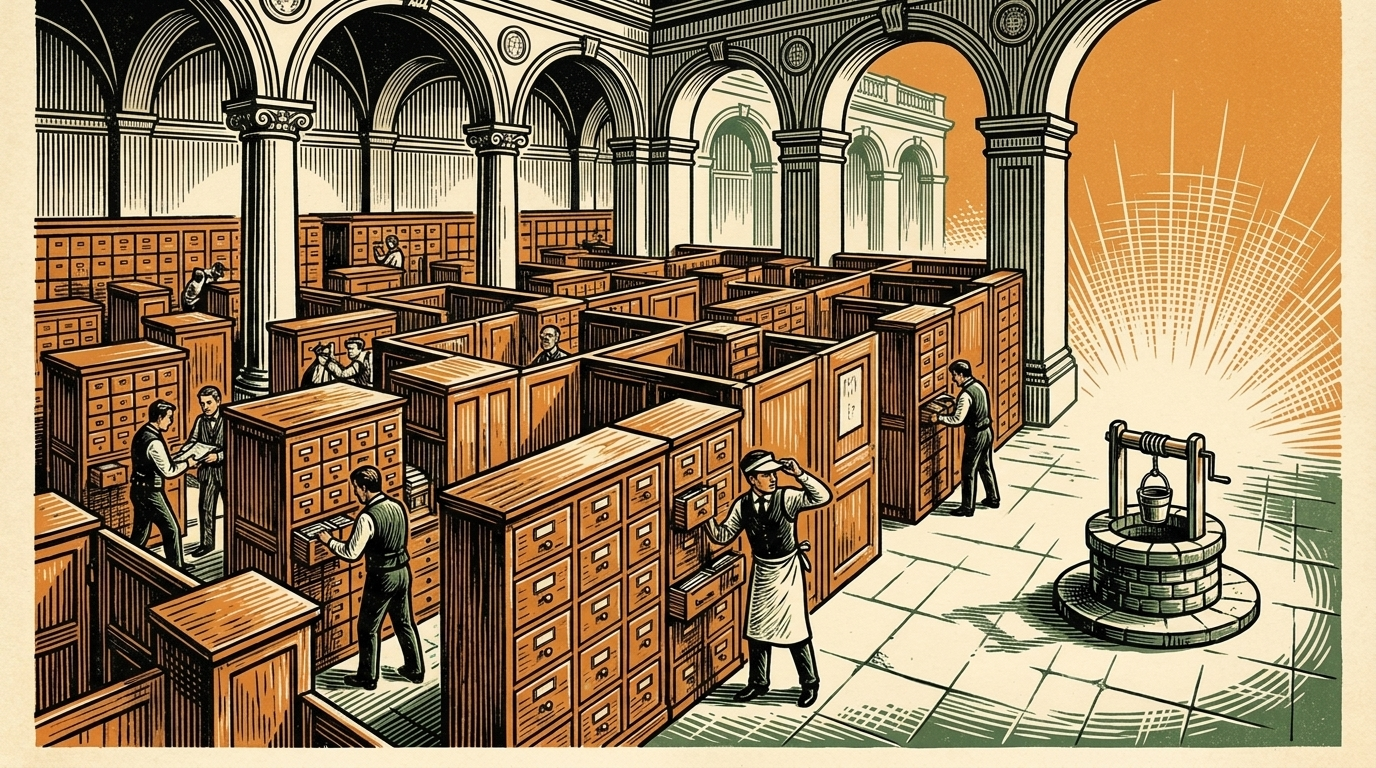
JPMorgan's analysts published a note this week arguing that the biggest structural risk to bitcoin is not Strategy's $8.2 billion position or its recent decision to sell coins. It is the quiet, steady construction of private, permissioned blockchains by the institutions bitcoin was built to route around.
They cite their own numbers. More than fifteen of the world's largest banks are building tokenised finance on private chains. JPMorgan's Kinexys network alone has processed some $4 trillion in transactions. None of it touches a public ledger. None of it needs to.
The observation is correct. The conclusion does not follow.
A permissioned blockchain is a shared database with an administrator. Membership is granted, entries are reversible by governance, and finality means the operator says so. It is genuinely useful: it collapses reconciliation, compresses settlement, and lets a syndicate of banks agree on state without a clearing house. That is a good product, and the $4 trillion is real.
Bitcoin sells something a bank structurally cannot: settlement that the settling party cannot reverse, censor, or inflate. The entire value proposition is that no administrator exists. A bank offering a permissioned ledger is offering a better version of the thing it already sold you — its own promise, at higher throughput.
You cannot compete with a bearer asset by issuing a nicer IOU.
Ask who is on the other side. The people moving $4 trillion across Kinexys are institutions that already trust JPMorgan, already clear in dollars, and already accept a counterparty. They were never bitcoin's customers.
Bitcoin's customers are the ones this paper has been reporting on for a week. A Nigerian borrowing naira against coins rather than sell into a 25% capital-gains regime. A Vietnamese saver who, until January, held an asset her courts could not name. A French exchange suing its own government over an automatic-disclosure regime that turns a customer list into a kidnapping target. None of those problems is solved by a faster interbank ledger. Several of them are made worse by one.
There is a real threat in the note, and it is not competition. It is enclosure. If the rails that carry the world's institutional value are permissioned, then the on-ramps to bitcoin are gated by their operators, and the choice to hold a bearer asset gets progressively more expensive to exercise. That is what France's DAC8 decree does. It is what Oman's mandatory mining pool does. It is what a $400 million charter-capital floor for a Vietnamese exchange licence does.
Bitcoin does not lose to a better database. It loses, if it loses, to the slow narrowing of the aperture through which ordinary people reach it. The analysts have identified the right room and the wrong fight.
Banks are not building a competitor to bitcoin. They are building the walls it will have to be reachable through.
Editor’s note: this is opinion. The JPMorgan note reaches us through secondary coverage rather than the research document itself; the $4 trillion Kinexys figure and the “15+ banks” count are as reported.
Free. Five minutes. No hype.
Subscribe free