 The Bitcoin Beacon
The central bank says crypto trading is legal now. In a town near the Togo border, bitcoin has been payroll for three years.
On December 19, the Bank of Ghana’s governor said aloud what roughly three million Ghanaians were waiting to hear: crypto trading is legal, and nobody will be arrested for using digital assets. Parliament had just passed the VASP Act; a regulatory sandbox opened in February with six firms; licensing rules roll out through 2026.
Most coverage reads this as the start of something. The reading order is backwards. The law is not creating a bitcoin economy in Ghana — it is catching up to one.
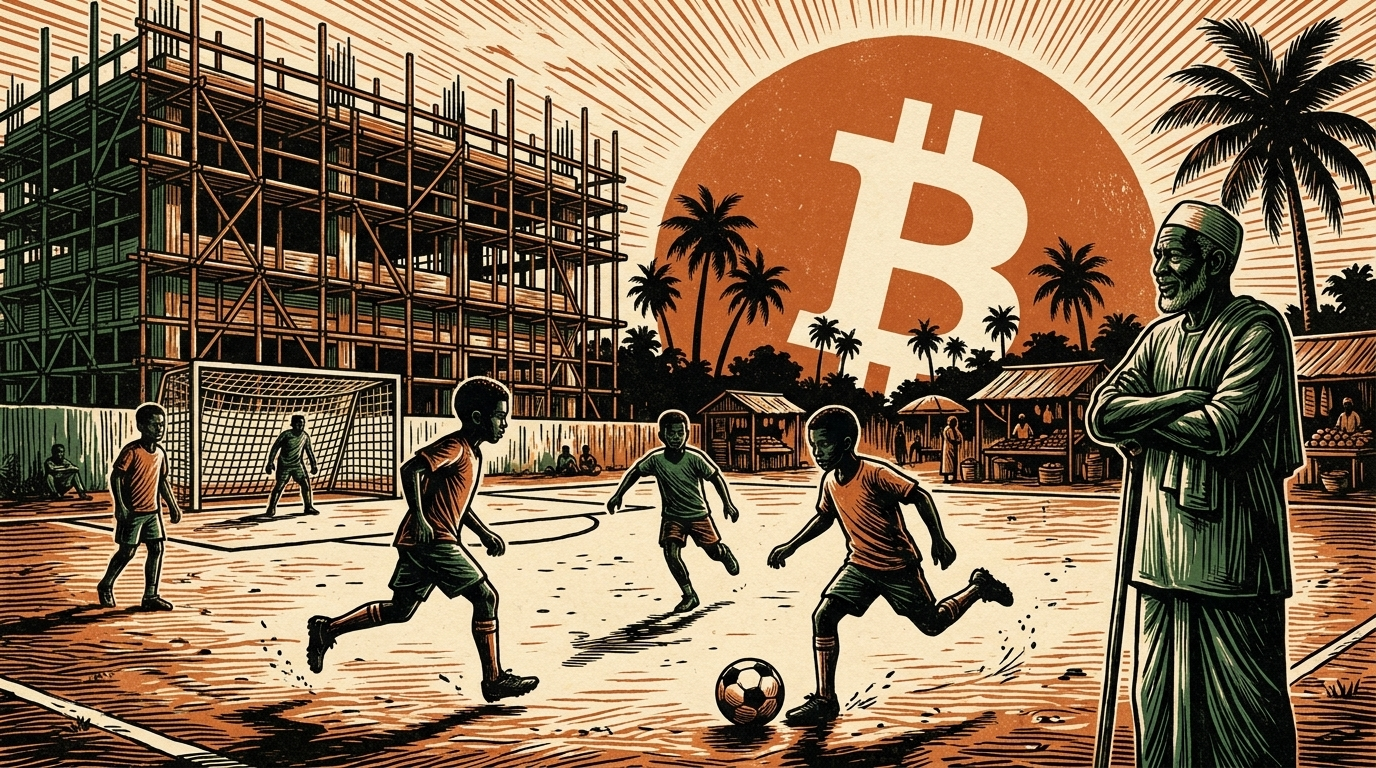
In Agbozume, a market town near the Togo border, Bitcoin Dua has run a circular economy since late 2023: students and traders earn bitcoin, spend it with local merchants, and learn coding and robotics in classes paid for with it. Block wired the project $150,000 in bitcoin grants across 2024 and 2025. The town is now building a roughly half-million-dollar youth sports complex — bitcoin-funded, targeted for December, still about $225,000 short.
Legal clarity doesn’t spark adoption. It de-risks the people already doing it.
Consider what actually changed for Bright Kportiklah, the developer behind BitSpenda, an app that settles Lightning payments into Ghana’s mobile-money rails. Before the Act, he couldn’t get the documents to approach the central bank. Now he can walk in the front door. Same app, same users — different weather.
We have watched this sequence all year: Kenya’s M-Pesa bridges, South Africa’s QR rails, the Philippines’ remittance corridors. Adoption arrives bottom-up, informal and unlicensed, because it solves a problem the formal system left open. Regulation arrives later, to ratify what works and tax what’s visible.
That order isn’t a scandal. It’s how money has always been adopted — use first, law second. The mistake is only in the telling: the license is the epilogue, not the plot.
The license came last. It usually does.
Editor’s note: this is the day’s opinion column, built from reporting dated December–February plus project updates; the sports-complex funding gap is the organizers’ own figure. User counts (“3 million Ghanaians”) are survey estimates.
Free. Five minutes. No hype.
Subscribe free