 The Bitcoin Beacon
Boracay proved tourists would pay in bitcoin. Now 400 merchants across the Philippines take it — and $35 billion in remittances is the real prize.
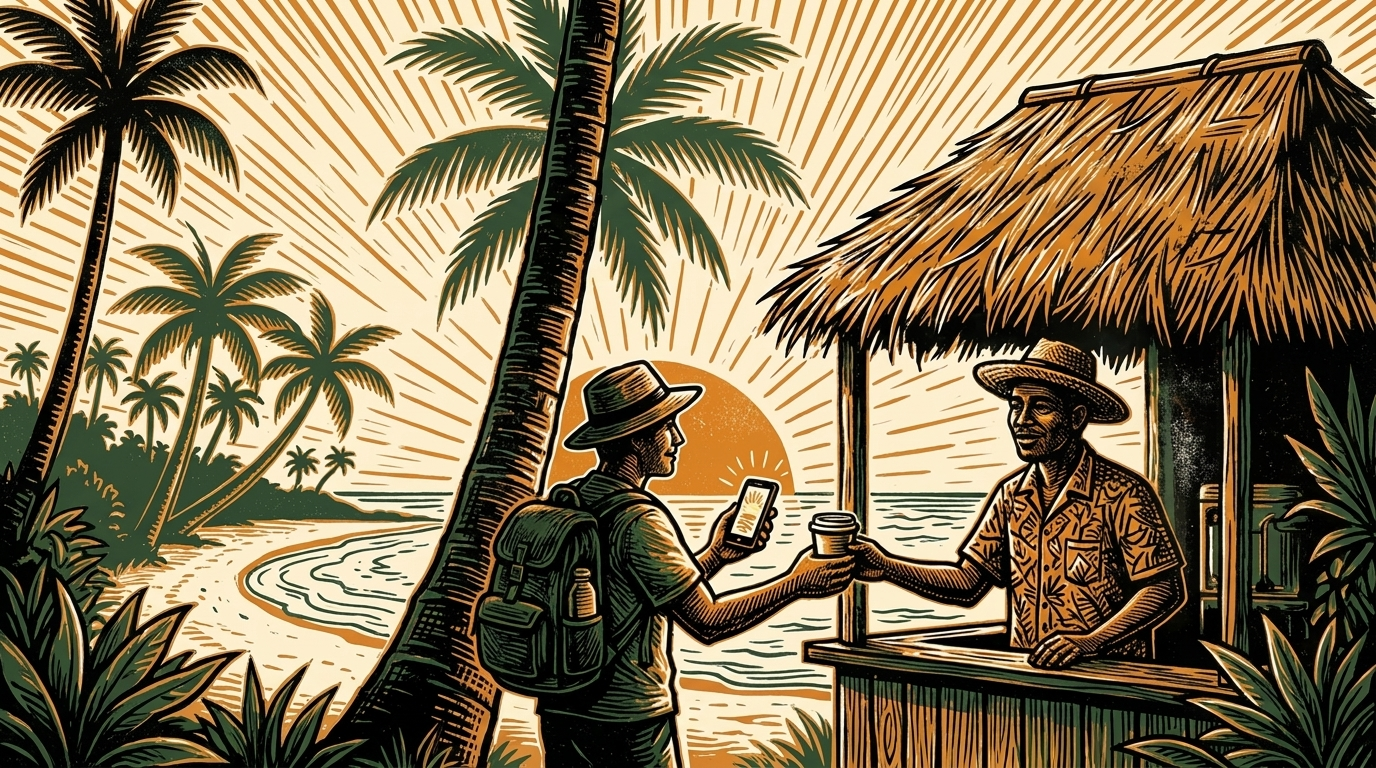
Four years ago a wallet company decided Boracay, a four-kilometre resort island in the central Philippines, would learn to spend bitcoin. The demo stuck. Pouch.ph now counts more than 400 merchants taking bitcoin nationwide — 250-plus on Boracay, the rest spreading through Cebu, Iloilo, Dumaguete and Bacolod. Convenience stores, pharmacies, dive shops, hotels.
A customer taps a phone; the payment settles over Lightning in seconds, for less than a cent.
Unlike El Salvador, nobody legislated this. No legal-tender law, no government wallet. Adoption came through tourism and remittances: visitors spend bitcoin, and merchants who want their business learn to take it.
You don’t need a country to declare bitcoin money. You need a reason to use it that beats the alternative.
Boracay is the showroom; remittances are the business. Filipinos abroad send home more than $35 billion a year — $12 billion from the US alone. Traditional remitters skim 6–10% per transfer. Lightning cuts that to a rounding error.
Strike’s Send Globally, built with Pouch, converts a sender’s dollars to bitcoin, routes them over Lightning, and delivers pesos. Neither side ever touches the coin. By April, Strike was clearing two million Lightning transactions a month.
Merchant counts are easy to announce and hard to sustain; the honest tests are transaction frequency and cash-out liquidity as Pouch expands. But the playbook is written: don’t convince citizens to hold bitcoin — let it travel underneath the money they already use.
Editor’s note: the 400+ and 250+ merchant figures are Pouch.ph’s own; the two-million-monthly-Lightning-transactions figure is Strike’s April 2026 disclosure. We treat merchant reachability as distinct from sustained usage, which is harder to verify.
Free. Five minutes. No hype.
Subscribe free