 The Bitcoin Beacon
The energy debate assumes mining takes power away from people. At the frontier, it is the reason the power gets built at all.
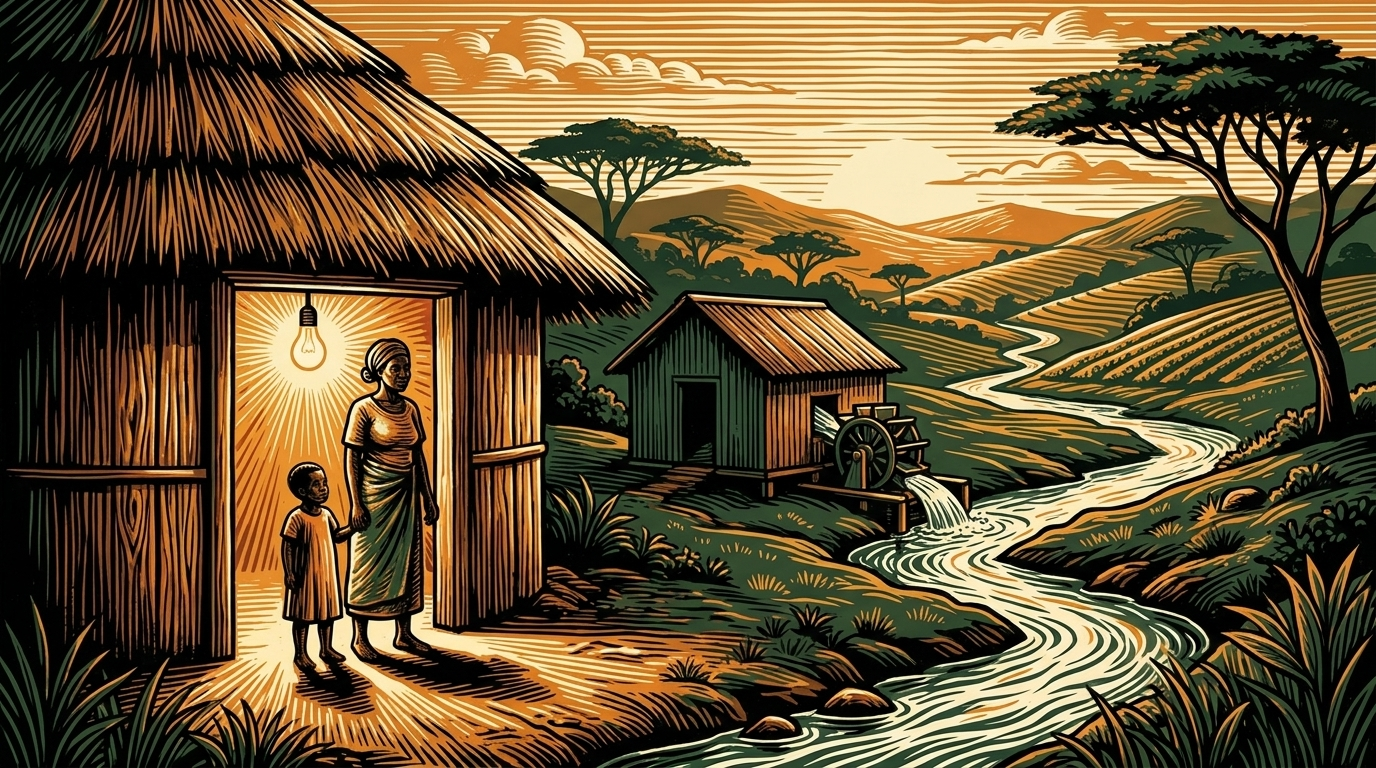
The energy debate assumes mining competes with people for a fixed supply of power. In the rich world that’s arguable. In much of the Global South it’s backwards: mining is why new power gets financed at all.
Gridless, backed by Jack Dorsey’s Block, runs seven sites across Kenya, Malawi and Zambia. The model: park machines beside a village run-of-river hydro plant no utility would bankroll, and become the customer that makes the numbers work.
A micro-hydro station can’t get built unless someone buys the power — and the village can’t afford enough power to justify building it. A miner breaks the loop: a buyer of last resort for every spare kilowatt, at any hour. Once the turbines spin, the surplus flows to homes.
In Bondo, southern Malawi, that arrangement now lights more than 1,800 off-grid households. The miner didn’t take their electricity. It’s the reason they have it.
Strip away the price charts and this is frontier adoption: a child who can read after dark.
Gridless is now raising capital to build its own run-of-river plants, with mining designed in as the revenue that carries a site until the community grows into the load. Africa’s hashrate is expected to roughly double by 2027 on this logic.
None of this settles bitcoin’s global energy debate. But in Bondo the equation runs the other way, and the output is measured in lit households, clinics and charged phones. An energy argument that leaves that out is the wrong argument.
Opinion. Household and site figures are drawn from Gridless’s own reporting and the coverage linked above.
Free. Five minutes. No hype.
Subscribe free